

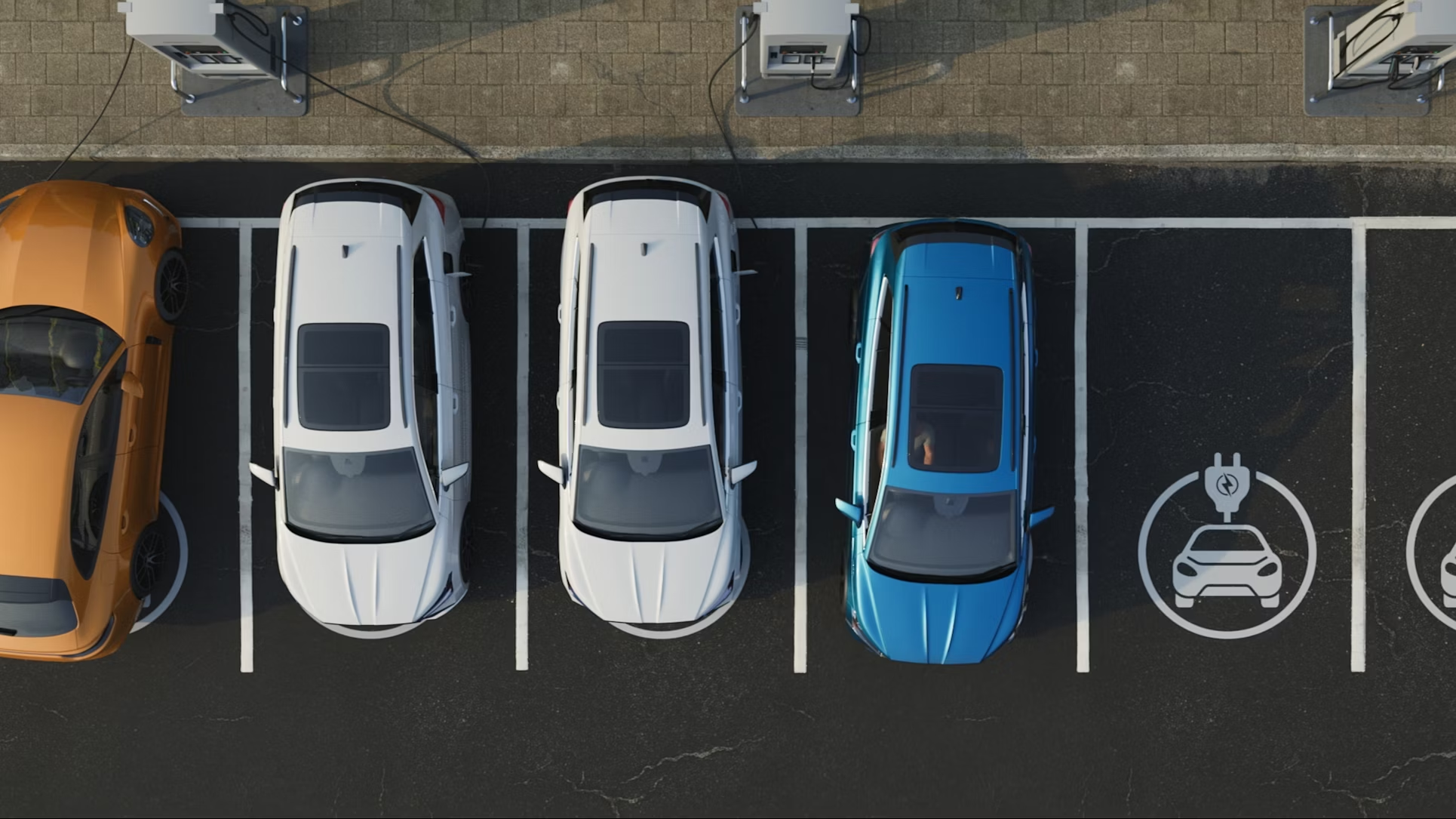
Global electric vehicle (EV) sales continue to accelerate, with market share expected to exceed 40% by 2030, according to the latest edition of the International Energy Agency’s (IEA) Global EV Outlook. The report highlights the increasing affordability and widespread adoption of EVs, even amid economic uncertainty and shifting policy landscapes.
Following record-breaking growth in 2024, electric car sales are projected to top 20 million units in 2025—accounting for more than 25% of all car sales globally. EVs passed a major milestone last year by capturing over 20% of the global market for the first time. In the first quarter of 2025 alone, sales jumped 35% year-on-year, with all major and many emerging markets reporting record Q1 figures.
“Our data shows that, despite significant uncertainties, electric cars remain on a strong growth trajectory globally. Sales continue to set new records, with major implications for the international auto industry,” said IEA Executive Director Fatih Birol. “This year, we expect more than one in four cars sold worldwide to be electric, with growth accelerating in many emerging economies. By the end of this decade, it is set to be more than two in five cars as EVs become increasingly affordable.”
China remains the global leader, where EVs made up nearly half of all car sales in 2024. The country sold more than 11 million electric cars last year—equal to total global EV sales in 2022. Meanwhile, sales in emerging Asian and Latin American markets soared by over 60%.
In the U.S., EV sales climbed roughly 10% year-on-year, crossing the 10% market share threshold. However, in Europe, growth plateaued due to reduced subsidies, though EVs still maintained a 20% market share.
Affordability continues to drive adoption. The global average price for battery electric vehicles dropped in 2024 due to increased competition and lower battery costs. In China, two-thirds of EVs sold were priced lower than their internal combustion engine (ICE) counterparts, even without government incentives. However, in markets like Germany and the U.S., EVs remained more expensive—by around 20% and 30%, respectively.
Despite higher upfront costs in some regions, EVs remain cheaper to operate. The report finds that even if oil prices were to fall to $40 per barrel, charging an EV at home in Europe would still cost about half as much as fueling a conventional car.
International trade also plays a key role. Nearly 20% of all electric car sales were imports in 2024. China, which manufactures over 70% of the world’s EVs, exported approximately 1.25 million electric cars last year—many to emerging markets where prices dropped significantly due to these imports.
The report also turns the spotlight on electric trucks, noting a 80% increase in global sales in 2024. Electric trucks accounted for nearly 2% of total truck sales worldwide, with much of this growth coming from China. In some cases, lower operating costs for electric trucks offset their higher purchase prices, making them cost-competitive with diesel models.
The Global EV Outlook is supported by updated versions of the IEA’s Global EV Data Explorer and Global EV Policy Explorer, offering in-depth insights into trends and policies. The agency also announced an upcoming special report—set to be released this summer—focused on the future of the global car industry as EV adoption accelerates, with an emphasis on building resilient and competitive supply chains.


