

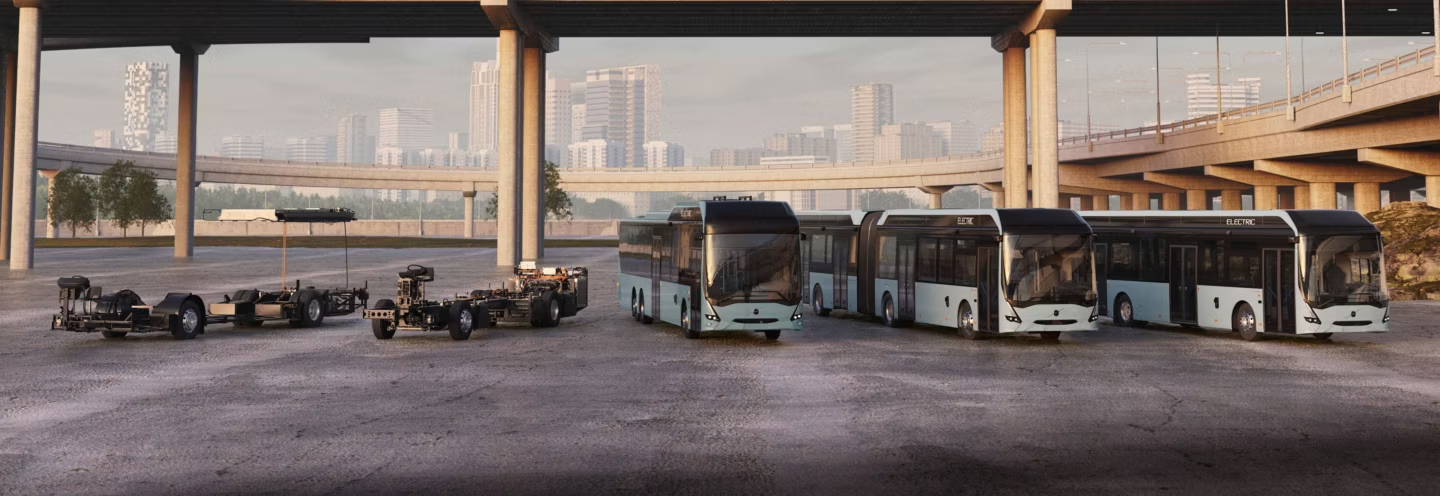
Volvo Buses is introducing an expanded range of electric transportation solutions for European customers with the launch of the all-new Volvo 8900 Electric and an upgraded Volvo 7900 Electric. Together with the Volvo BZL and BZR platforms, this new lineup offers sustainable and versatile options for city, intercity, and commuter services, aligning with the region’s growing focus on eco-friendly public transport.
“Many cities and regions in Europe have made significant progress in electrifying city traffic, and expanding to commuter and intercity transport is a natural next step. We are very happy that we can offer our customers sustainable, efficient, and high-quality products that meet their needs,” said Thomas Nylund, Head of Volvo Buses Europe.
The Volvo 8900 Electric, based on the global Volvo BZR platform, is a low-entry bus designed for flexible operation in city, intercity, and commuter transport. It is available in two- or three-axle versions and can carry up to 110 passengers. The vehicle can be equipped with one or two electric motors, offering up to 400 kW of output, or roughly 540 horsepower. The modular battery system allows for a capacity of up to 540 kWh, providing adaptable energy solutions for varying route requirements.
“The routes in commuter and intercity transport are very different. With the new Volvo 8900 Electric, we have a flexible and reliable solution that can be optimized and adapted for our customers’ different prerequisites and needs,” added Nylund.
Alongside the new 8900 model, Volvo Buses is also rolling out an upgraded version of the popular Volvo 7900 Electric, including its articulated variant. The low-floor 7900 model has been a success across 25 countries and now comes with enhanced features for driver comfort, including a redesigned driver’s environment with an intuitive instrument cluster that minimizes distractions.
Both the Volvo 7900 Electric and the new Volvo 8900 Electric include Volvo’s latest active safety systems, prioritizing the protection of pedestrians and cyclists. These safety features often exceed EU standards and other global legal requirements, underscoring Volvo’s commitment to road safety.
The chassis for these models will be manufactured at Volvo Buses’ facility in Borås, Sweden, while the vehicle bodies will be produced by Volvo’s partner MCV in Egypt. MCV is also building a new production facility dedicated to complete electric bus manufacturing. Production is set to begin in early 2025 for the Volvo 7900 Electric and in mid-2025 for the Volvo 8900 Electric.
“Together with our partner MCV, we are looking forward to delivering premium products of the highest quality to our customers and continuing to develop Volvo Buses’ offer with new solutions that meet the needs of city and intercity transport, both today and into the future,” said Nylund.
With the expansion of its electric bus lineup, Volvo Buses aims to support European cities and regions in their transition to cleaner, more sustainable public transport solutions.


